Dan Rudmann
About Archive Photos Also on Micro.blog
  • You're Here! Recapitulation

    Reposting this piece I wrote twelve years ago, documenting the first of many SXSW festivals that I helped organise in Austin.

    At her keynote address during SXSW 2014, Lady Gaga spoke emphatically to defend her own choice to perform under the auspices of large corporate sponsors. Lady Gaga’s well attended showcase during the festival was funded by Frito-Lay for the purposes of promoting Doritos tortilla chips. While the correlation between Doritos and Lady Gaga might not be readily apparent to most people, for Lady Gaga it is clear:

    “Without sponsorships, without these companies coming together to help us, we won’t have any more artists in Austin. We won’t have any festivals, because record labels don’t have any fucking money.”

    While she is correct to point out a severe lack of funds for organizations who actively participate in the music community, Lady Gaga is wrong to assume that those types of hurdles might incapacitate artistic production and community gatherings. A festival can be born not because we capitulate to questionably-motivated deep pockets, but simply because enough people want it to happen. Here’s the story of how we did just that.
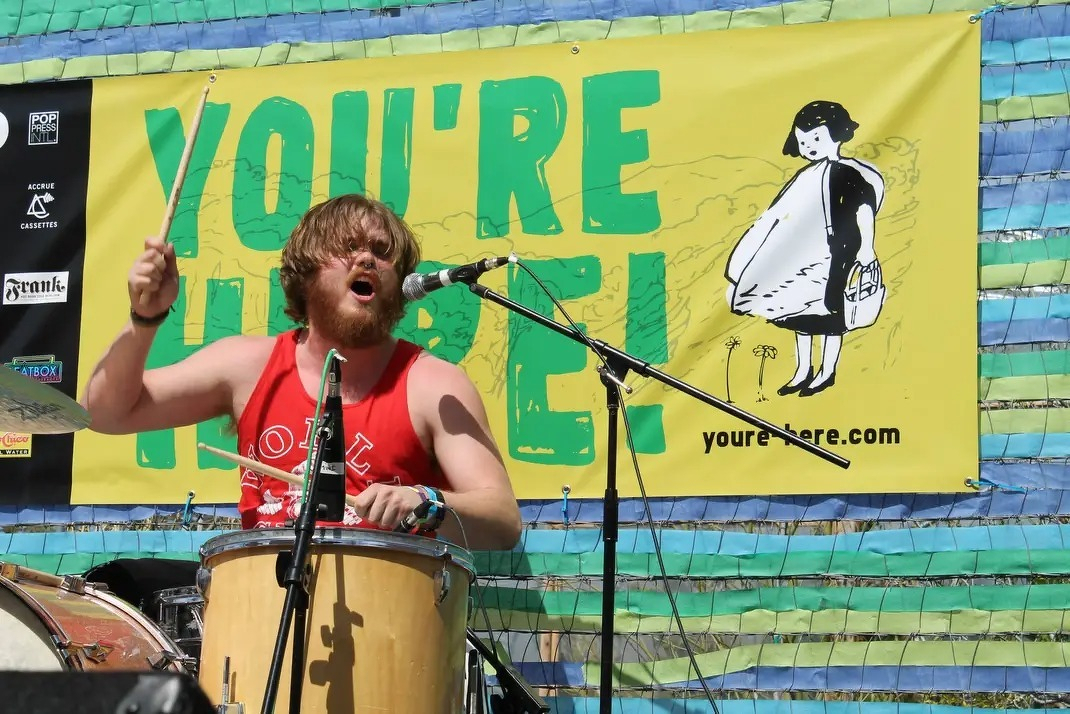
    In January of this year, I met with Jenna Carrens and Michael Landon, who run Attendance Records andEstuary Recording Facility, both out of mutual admiration and to discuss the possibility of throwing a party during SXSW. Attendance Records is an incredible non-profit organization that brings Austin musicians into public schools to supplement otherwise halted arts programs and Estuary is responsible for the production of countless beautiful records (including the just released Hunting Songs by RF Shannon). Before meeting with Jenna and Michael, I was of the mind to opt out of SXSW entirely. Attempting to carve out a niche during such a hurricane of a week in Austin seemed impossible. But as the three of us got to talking, it became clear that we had an opportunity to have some fun and bring people together, and we shouldn’t squander it.

    As we dug into the nuts and bolts of putting the event together, two things became clear: (1) we couldn’t afford to do anything, and (2) we had so many brilliant artists willing to perform that we couldn’t contain this to a single day show. We weren’t about to let the first thing stop us so we called up Bryan Parker, whose deep love of the Austin music community is apparent in his work at Pop Press International and True Sincerity, Adam Hilton, whose Accrue Cassettes label is an integral part of Austin, and Justin Morris, the mad scientist at Western Dynamo. My colleague Andrew Stevens also suggested we bring in Vincent Bancheri, who runs the Portland-based label Mama Bird Recording Co. With seven entities total – non-profits, small independent businesses, and little labels – we still didn’t have “any fucking money.” But we were on our way.

    After a short hunt, we found our venue. Up Collective is a gorgeous space in East Austin that contains artist workshops, a gallery, and a yoga studio. Plus, they have this phenomenal backyard flanked by gardens. We could run two stages simultaneously – one in the backyard and one at the upstairs gallery – almost squeezing in everyone we wanted to play. Ricky Jaén, who runs Up, was so supportive and excited about the event that we began to see the shape of our gathering. In truth, we knew we had no choice, we had to extend this thing over two days to properly do it justice. We were getting in deep. What started out as a little day show quickly became something featuring 34 bands and a conference (on audio engineering and production, run by Western Dynamo), over two days with indoor and outdoor stages.

    There are a lot of pieces to consider when something becomes this scale. But the luxury of having so many collaborators meant that certain aspects were a bit off my plate. Procuring audio equipment, for example, was a bit of a herculean task that I could largely ignore while I helped to put together schedules and procure some donations. Organizing such a large number of bands should have been more difficult but everyone we work with, both Punctum Records artists, and the other folks who joined us, were so generous and selfless that things seemed to fall into place. And a few non-corporate businesses who support our community regularly and with integrity donated cases of beer, or offered to feed our attendees with hot dogs, bake vegan donuts, and hand out free ice cream. This was going too smoothly, something had to give.

    But it didn’t. The next step in setting up the event was perhaps our most ambitious: we built a stage. That backyard at Up Collective is gorgeous, but it needed some love. Thanks mostly to Michael Landon’s experience building skate ramps and Morris’ previous construction work (though it didn’t keep him from smashing his hand with a hammer multiple times), and in weather that oscillated between below freezing and 85 degrees, we spent six days constructing a 12″x16″ stage out of plywood and 2×4’s sturdy enough for the most raucous performance and pretty enough to hold our best looking artists. The positive vibes from Western Dynamo’s Jon Roberts, who worked daily to help build, and the many other folks who stopped by while we were making this thing made the time and effort breeze by. While it might have been the most arduous piece of the puzzle, building the stage allowed the seven of us to get our hands real dirty together – it was the locus around which we all became a bonafide team and would become a centerpiece of sorts for the entire event.

    With so much to accomplish, the date of event itself snuck up on us. I woke up that first morning, March 12th, a bit overly excited. So I took a handful of leftover posters (beautifully designed by Maseman) and ran downtown to tape them to walls and light posts before sunup. This overwhelmed me a little bit. I thought back to when I first moved to Austin over five years ago and walked around in awe of SXSW. That I might someday participate in this way – even just putting up posters in the convention center for an event I helped create – I could never have imagined it. And amidst the laments of the changing face of SXSW, that we were pulling something off that had our fingerprints on it in an uncompromised way, made this event feel larger and more attainable than before.

    Youre-Here-2014-76But when I got to the Up Collective, all those good vibes were almost immediately squashed. Someone in the surrounding neighborhood saw us setting up and threatened to call the cops unless we had proper permits – of which we had none. He was incensed, and I think that reflected more those concerns about the larger SXSW – where it is common practice for a multi-million dollar tech company come into a mostly undisturbed part of town for a day, completely realign it for the purposes of their own promotional party, and leave the next without hardly cleaning up behind. We started to tense up. All of that work might be down the drain before the first band even gets to play. But Ricky spoke with the man and explained the event. His demeanor changed, he smiled, shook Ricky’s hand, and left. And then the music started.

    Once it began, the first day flew by. We darted back and forth between stages and our booths, exchanging high-fives along the way. People started to show up, then a lot of people started to show up. They told us our event felt like old Southby. Bands told us these were the best sounding stages they played on all week. 16 bands played that first day, many incredible Austin folks but also artists from as far away as Tel Aviv. We couldn’t have dreamed up a better lineup. Both for their talent and their generosity donating their time and skill, playing without ego.

    We all woke up Thursday morning to the news of the tragedy on Red River. At first it was something too foreign, too at odds with all of Austin’s expectations for the week, to grapple with. As details became clear, its effect became pervasive, highlighting our interconnection in the worst possible way.

    At our event, the tone was somber and reflective at first, but became gradually more celebratory of one another. My own experience tells me that tragedy should be held together. We became a site of that, as I’m sure many places throughout Austin were that day and in the days ahead. There was meaning and immediacy at the Up Collective in the same way as the day before, but also different. I felt grateful for every performance that took on a quieter tone and each one that turned up the volume.

    Again, that second day flew by. Perhaps even more so because everything we learned at day one was seamlessly implemented at day two. 18 bands performed on March 13th without a hitch. And remember the man who came out the first day to shut us down? He came back the second day, had some ice cream, a beer, and enjoyed the music.

    As we started to wrap up the second day, it was clear that You’re Here! was an actual music festival. At final count, over 1,200 people attended the event. We got to hear 1,530 minutes of music, eat hot dogs, meet new folks, sing, and dance. And that outdoor stage is just too pretty to deny calling it anything but a festival. We named our event You’re Here! to emphasize presence, highlighting a phrase we say because we’re happy to see each other. This was our music festival because it brought together all these incredible folks – artists, audience members, small businesses, little labels – and we couldn’t be happier.

    So, Lady Gaga, here’s how we did it, and how we will continue to do it. Seven entities came together and chipped in a few hundred dollars each to cover things like space costs, audio equipment, beer, and wood to build a stage, 34 bands donated their time and talent, and countless folks came together to gird it all up. There will always be artists in Austin because we’re the ones who really have a say in the matter.

    For the lineup and more info on the festival, check out youre-here.com

    And it’s impossible to do this justice, but thank you to everyone who was part of this whole thing–the bands, those who donated, people who came out. It was a true joy. And to the six other groups who collaborated with Punctum Records to pull this off (pictured below), you guys fucking rule.
    → 10:07 AM, Mar 16
  • OSCU Publishing

    The people at knowledge organisations deserve greater literacy and agency within the processes of publishing. The work of OSCU Publishing is as much to facilitate publishing projects as it is to provide education and accessibility on an activity that is integral to, yet too long alienated from, scholarship. We assert that by wresting the power of publishing into the hands of the people who act themselves as the infrastructure for science and progress, rather than those who extract from it, we can imagine mutually beneficial systems, rebuild trust between institutions and society, and generate more inclusive and vibrant forms of scholarly exploration and participation.

    An open statement from the Open Science Community Utrecht. Read the full piece here.

    → 3:41 PM, Sep 30
  • In the current academic realm, we are set at each other’s throats along too many axes and expected to treat the internal competition as laudatory. Solutions to these problems are extremely unlikely to come from government or managerial interference. Instead, what is needed is a sea change in day-to-day academic life, in which we replace relentless individual striving with a focus on collective action and collegial solutions to academic problems.

    James L. Flexner and Catherine J. Frieman, “Interdisciplinarity as Solidarity”

    → 10:09 AM, Dec 31
  • Music Bookmarks, October 2024

    Michael Kiwanuka - Floating Parade

    Sampha & Little Simz - Satellite Business 2.0

    Angélica Garcia - Juanita

    Leon Bridges - Peaceful Place

    → 8:29 AM, Oct 19
  • Upcoming Workshop: Building the Commons

    The implementation of Open Science across the Netherlands is beginning to reorient the way people at knowledge organisations structure their work. Institutions are affirming these changes by reimaging programs for Recognition & Reward and developing innovative networks such as DCCs (Digital Competence Centers). By exploring these modes of support and collaboration across the Netherlands, this interactive session will co-design structures that facilitate community, valorisation, and care as intrinsic to science.

    The workshop “Building the Commons: How Open Science and DCCs Bring About New Ways of Working” will be divided into three parts. The initial presentation will establish a shared foundation for ideas around open and networked modes of knowledge production, introducing the concept of the commons. The second section will showcase a series of spaces already beginning to enact this type of cooperation within and among organisations in the Netherlands, including Utrecht DCC, VU Art Science, the Dutch Open Science Communities, and the national TDCC. Finally, participants will engage in a collective exercise to design common networks across their communities. The session is intended for people working in research and research support who are interested in the connections and infrastructure that generate Open Science.

    During this session, we will assert that the present moment in the Netherlands is an extraordinary opportunity to build such knowledge commons due to the national commitment to Open Science and the unique affiliations among present knowledge workers. We seek to build upon this collaborative spirit to render our work more inclusive, engaged, diverse, equitable, and meaningful. People attending this session will gain insight into projects that rethink cooperation as well as a framework and lexicon to render those types of efforts more visible and resilient. The output will be designs and resources that help people participate in and replicate open and networked forms of knowledge production.

    Organized by: Coosje Veldkamp, Utrecht University; Anna van ‘t Veer, OSC-NL; Martine de Vos, Utrecht University; Nicole Emmenegger, TDCC–SSH; Dan Rudmann, Utrecht University; Lieke de Boer, Netherlands eScience Center; Lena Karvovskaya, Vrije Universiteit; Lilli van Wielink, Utrecht University

    Netherlands National Open Science Festival - Maastricht University - October 22, 2024

    → 8:18 AM, Sep 26
  • Recent Projects

    The Research Software Community Leiden established a new venue for researchers and software engineers to exchange knowledge. Morgen Universiteit built networks of solidarity and conviviality across the Netherlands. Cooperative Open University Publishing (established with Leo Waaijers) rethought labour and mutual support in scholarly communications. Open <3 Science surfaced engaging and playful conversations on the intersectionalities of Open Science. The UDCC strengthens networks for collaborative resource development at Utrecht University.

    → 4:16 PM, Sep 25
  • Music bookmarks, August 2024

    Font - Hey Kekulé

    St. Vincent - Broken Man

    Yannis and the Yaw - Walk Through Fire

    → 8:51 AM, Aug 23
  • “I propose a philosophy of openness predicated on a process-oriented view, whereby research is understood first and foremost as an effort to foster collective agency, grounded on intimate forms of relationality and trust, among widely diverse individuals and groups – an agency that is often enacted through recourse to various technologies, shared interpretations of research outputs and collaborations with non-human agents. This view of research, grounded in social epistemology and the empirical study of scientific practices, understands openness as the quest for judicious connections among researchers – connections that are always mediated by the exchange of objects and technologies but can never be subsumed to such an exchange, lest science loses the power to support meaningful human interactions with an ever-changing world.”

    The Philosophy of Open Science by Sabina Leonelli

    → 2:16 PM, Aug 7
  • “Research and Knowledge Organisations are impactful primarily through their capacity to bring people together.”

    A little over a year ago, I got together with knowledge workers and community organizers across the Netherlands to write A Manifesto for Community Management at Research and Knowledge Organisations

    → 12:51 PM, Jul 31
  • “The end has been mistaken for the beginning. The focus on things (research articles and other outputs) remains a mistake and focus should be redirected to people, relations, processes, and production.”

    Eight Theses on Scholarly Communication by Dave Ghamandi

    → 7:54 AM, Jul 30
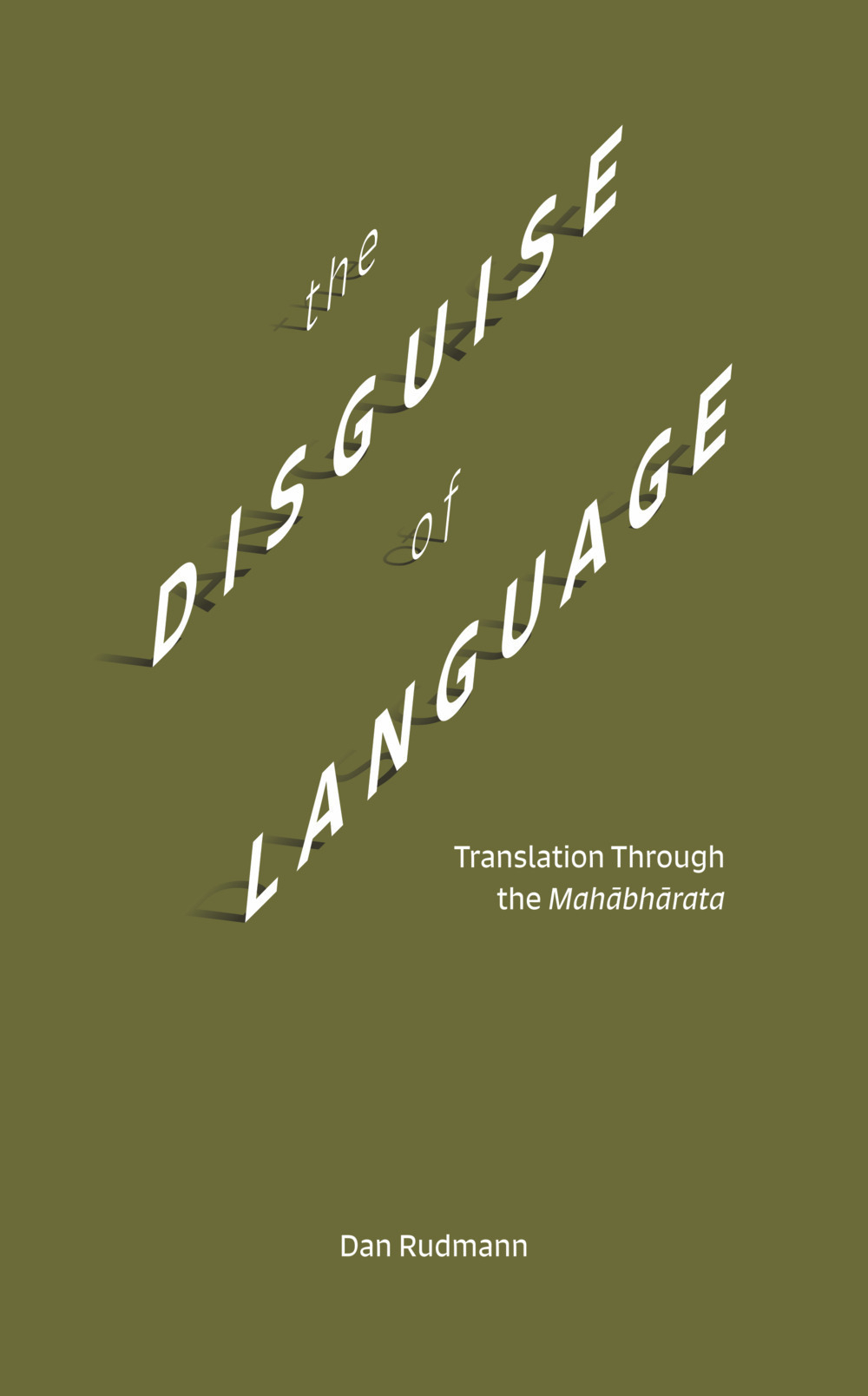
  • The Disguise of Language: Translation through the Mahābhārata is available open access at Humanities Commons! The book started as my doctoral dissertation and was published by Motilal Banarsidass in 2018. Cover designed by Dana Johnson.

    → 11:25 AM, Jul 4
  • Against Memory

    My dad died one year ago today, following many years of experience with dementia and Alzheimer’s Disease. The Alzheimer’s diagnosis occurred in his mid-fifties, and he lived roughly seven years with the disease. Those years often felt like losing him several times over. He would be simultaneously present and not there. He would be back and forth in different states of consciousness. Those changes would call into question who or what he was, just as he would question my own identity. “You’re my cousin!” he once said to me with joy, as though recently reunited.

    I have two particular memories of my dad. The first is the feeling of his hand on my back. As a child at night, being lulled to sleep. As a teenager, being comforted by him in a moment of distress or sadness. As an adult, in friendship and understanding. The second memory is his love for cameras and photography. A somewhat unwieldy but beautiful camera would always be on hand to capture a moment. At times as a child I would be annoyed with him, wanting him to come out from behind the lens and play. I watched his slow care in taking pictures, developing photographs, and arranging them into books.

    Even from childhood, I had difficulty looking through those photobooks. Memories were something missed, longed for, lost. My dad was proud of those photographs and they filled me with sadness. Only now can I look at them with some quiet. Maybe because they are what’s left. The greater sadness later is how those pictures, at times, failed to preserve his memories. He would see a picture of himself holding me or my brother as a baby without recognition.

    It might be a strangeness of his particular instance of Alzheimer’s, or just a discrepancy from the way it is often depicted in the movies, but at most times my dad did not seem to know that he had the disease. He was not aware of his loss, and even in moments of confusion accepted everything as normal. There was only one time my dad seemed to realize that he was experiencing decline. A couple years ago, he wanted to show me one of his digital cameras and found that he could no longer understand how it operates. All of his avenues for holding onto a moment were being closed off to him. I told him he could still learn how to use the camera again.

    I thought my dad’s inability to remember me or himself would turn him into someone unrecognizable, but I was wrong. His gentleness and easy smile remained. And he never lost his desire to make someone feel loved. My dad, Max Rudmann, was born in Cairo, Egypt in the middle of the 20th century. He came to America as a child, went to high school at Brooklyn Tech, was a fencer, a speed skater, and a cyclist. Later he became a lawyer and had two children. He taught me to play backgammon and ride a bike. He is forever an exemplar of kindness. I can still feel his hand on my back.

    Given what’s happened to everyone this past year, I haven’t had the strength most days to delve into memories of my dad. But throughout the last year, I found that when I needed it the most, I could still call on him.

    → 5:06 PM, Feb 25
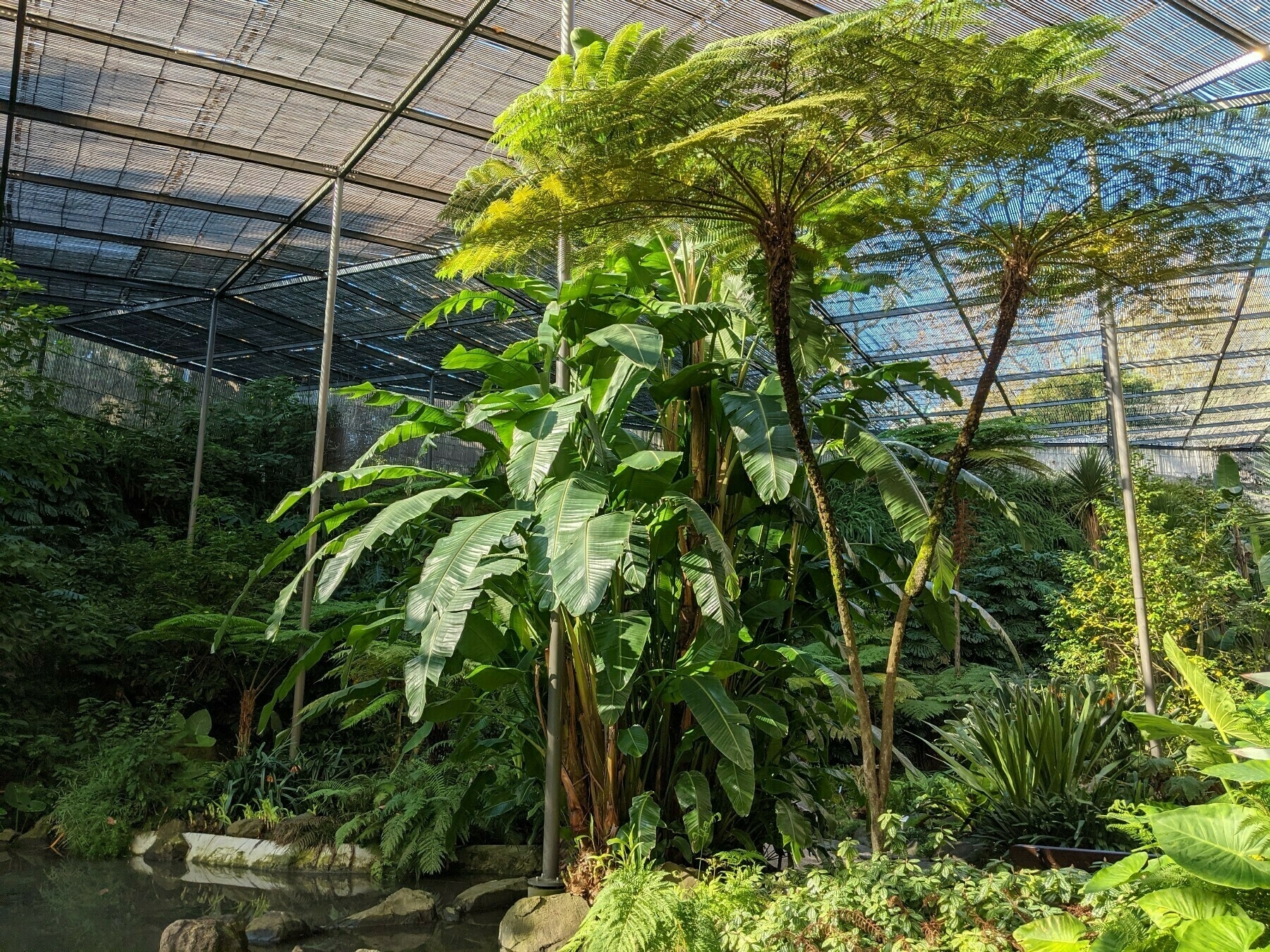
  • Estufa Fria

    → 3:03 PM, Dec 2
  • Open Publishing Fest

    How will we shape the knowledge that will shape the future?

    This question launches two weeks of discussions, presentations, and performances connecting people around the world who are presently separated by discipline and distance. Open Publishing Fest, a decentralized public event, brings together communities supporting open source software, open content, and open publishing models.

    Open Publishing Fest came out of a number of conversations I’ve had recently with Adam Hyde of Coko on bridging our current divides. Our hope is to showcase what we see as a major restructuring in the way that we make our work public and learn from one another. We seek to build networks of resilience and care for people working on new ways to develop and share knowledge.

    Open Publishing Fest will be held from May 18-29 in a decentralized fashion. Sessions are hosted by individuals and organizations around the world as panel discussions, fireside chats, demonstrations, and performances. We connect those points to bring them in conversation with one another and map out what’s next.

    Reach out (dan@puntumbooks.com) if you’d like to develop a session or curate events around the fest. You can also submit proposals at the website. Folks recently signed on to help develop events include Lucy Barnes at Open Book Publishers, John Chodacki at California Digital Library, Chris Hartgerink at Liberate Science, Christine Fruin of Atla, Martin Eve at the Open Library of Humanities, as well as Karen Yook, Daniela Raciti and Todd Harris of microPublication.

    Special thanks to developer Julien Taquet from Coko with help from Yannis Barlas of Coko and Boris Budini from Cloud 68, and designer Kevin Muñoz at Super Mega Studio.

    Join us at OpenPublishingFest.org

    #OpenPublish

    → 10:47 PM, May 5
  • “We live in a world where captains get arrested for saving people’s lives on the sea; where a person downloading scientific articles faces 35 years in jail; where people risk charges for bringing contraceptives to those who otherwise couldn’t get them. Folks are getting in trouble for giving food to the poor, medicine to the sick, water to the thirsty, shelter to the homeless. And yet our heroines care and disobey. They are pirates."

    → 8:38 PM, Apr 2
  • Open / Accessible + Ethical / Equitable

    Scholarship cannot be open and accessible until we recognize and make space for a multiplicity of forms. And we can only make that space by banding together against scarcity narratives in the humanities.

    When Knowledge Unlatched announces a single proprietary platform for digital OA it is at best a myth that it is neutral or agnostic to types of scholarship it hosts or worse an incursion that threatens erasure of diverse voices. And we don’t have to speculate on the types of damage the ‘single platform solution’ can have on expression. We’re all currently living the ruins of that system post-internet 2.0.

    I think back to an article Zadie Smith wrote wrote about Facebook 9 years ago. There Zadie Smith notes that her concern with Facebook is that it represents only one person’s view for how we should utilize digital communication and present ourselves to the world.

    What might the internet be like if we didn’t conform to one mode of expression for so long?

    Academia faces some revolutionary changes in how it functions internally and interacts with society. It might be tempting to think we need single ‘comprehensive’ solutions to be austere, but I think it’s important we reject such fears and let more people in.

    Many of our discussions at ScholarLed imagine an infrastructure that acts as scaffolding among different forms of scholarship - and that’s a future that I think might not only be open and accessible but also ethical and equitable.

    Open and accessible scholarship is as much about how and what we write.

    So when a senior scholar tells others that certain types of language should be frowned upon, even going as far as labeling that language “jargon” and “undemocratic,” we should recognize the illiberal turn. It is illiberal and undemocratic to say that expression should be for everyone and in the same breath seek to constrain forms of expression. Particularly egregious to cite the public’s capacity for comprehension to justify such a claim. The public is varied and diverse and smart.

    We’ve seen such a clear example of the public’s intelligence and ability to participate in scholarship recently (though in a way that surfaces every scholar’s deepest fear in being read by more people) in realigning the historical interpretations of that new book.

    When I ran my bookstore, the most scholarly scholarship not only sold great but generated amazing conversations in the shop. My customers were by in large people in their 20s who didn’t go to grad school. Which is to say, I get the sense that when some scholars try to tell us what the public wants, they haven’t spent much time with the public.

    There are so many publics and there is so much people care deeply about and want to learn and teach together. But the humanities are not going to reach all those people and contain all those voices - or be open and accessible - if we believe that anything we do has to come at the expense of everything else.

    → 10:24 PM, Sep 2
  • The Enclosure of Scholarly Infrastructures, Open Access Books & the Necessity of Community

    An important statement from ScholarLed

    → 5:18 PM, Jun 5
  • Studium (2013-2018)

    In 2013, while writing my dissertation at UT Austin, I found myself part of two wonderful families: an academic one and an arts one, the latter being Austin’s music community. Often, I found myself having the same conversations in both houses, and wanted to help bridge the two. I was also working for the brilliant press Punctum Books and, we translated its practices and ethos in publishing scholarship to publishing music.

    Punctum Records' first release was a flexi disc by local surf rock band Shivery Shakes. By 2014, we were publishing more than an album a month; often to vinyl but also an array of conventional and experimental formats. Sounds ranged from an 18-piece orchestral rock band to an album of Werner Herzog DVD commentary remixed with backing piano.

    In the spring of ‘14 we pulled off two projects that were well above our weight: an unofficial SXSW party with with over 1,200 in attendance, and three days of music at venues across NYC along with a symposium at The New School Center for Transformative Media. That summer, I teamed up with friends who had diverse but complimentary retail or programming ambitions to find a base of operations. After a few months of us rehabbing an old warehouse space, we opened Studium at 908 E. 5th St in East Austin. During the day, I sold books and records while another business in the same space sold clothing and accessories. We had extra seating for a neighboring coffee shop, and an organization held monthly music classes for kids. At night, I hosted live music, readings, and conferences. I was working at the space most days from 9am to midnight.

    From fall 2014 through 2015, we hosted music shows nearly every other night and we also have The New Directions in Anthropology conference, readings as part of the Texas Book Festival, the experimental music No Idea Festival. It was blissful. But largely unsustainable. Rent for the space was $8K/month and book and record sales were not holding up. The only way we made rent that year was when a large company sub-leased our space for the week of SXSW. And they trashed the space so thoroughly that it took some weeks to reopen. (This makes it sound like we had some raging punk business or Vice rent the space, when it was actually a very prim financial-sector multi-national corporation)

    Sitting in the shop day after day watching folks get stoked about the scholarly books we had for sale and talking to people about my dissertation, which I was having difficulty finding time to write…I thought I might try teaching classes there. What began as a weekly critical theory reading group at Studium grew into a community-led curriculum called Human Sciences.

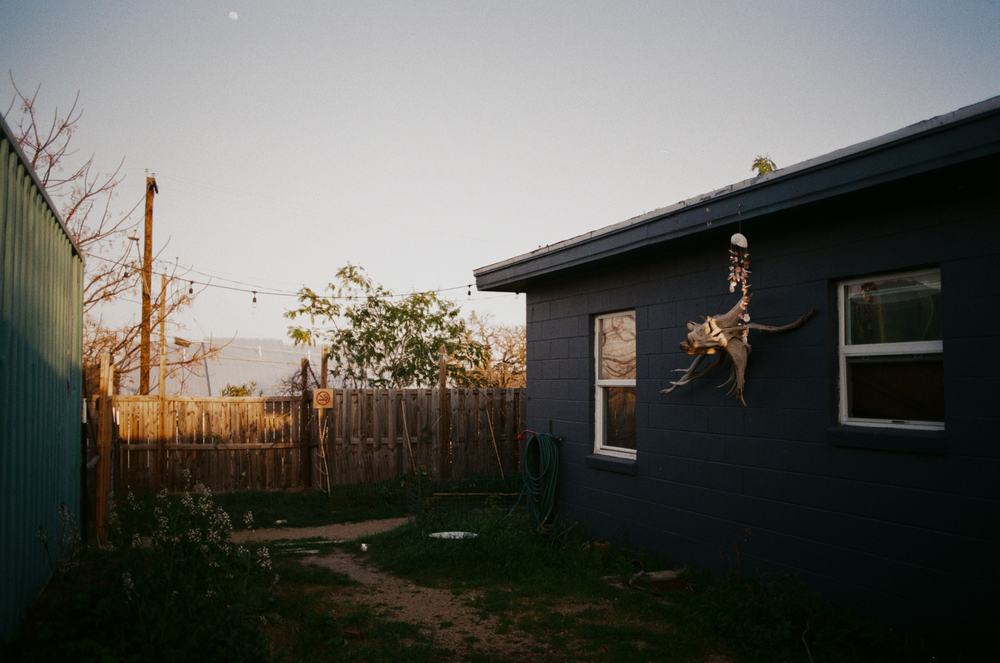
    With a large audience participating in our public education program, it was time to move away from retail and that big space. We left 908 E. 5th at the end of 2015, I defended my dissertation, and then reopened Studium in a small cinderblock building at 2108 Rosewood Avenue (pictured below) a bit further east. I also began taking steps to register Studium as a 501(c)(3) non-profit organization, hoping that model could sustain us. The process took a few months and a lot of help from what was now a very solid team of friends in Austin making Studium happen. The move allowed me to refine and realize Studium’s reason for being. Education was at our core, sparking ideas for performances and community initiatives that would grow further into publications. It took three years to get to that point, but now we were firing on all cylinders. Our classes translated the graduate seminar into a public space, and then took the discussion further into civic action and creative expression.

    Following a course on migration, for example, our participants came up with the idea of partnering with Refugee Services of Texas on an art show that expressed welcome to newly settled families. 21 Austin artists and 5 print shops volunteered to create enough art to fill 300 new homes for refugee families. And we threw some shin digs,too, like a three day festival with She Shreds Magazine.

    By 2016, our alternative pedagogy program was truly to growing. We were teaching theory classes and more; with help from the local community we added a film studies series, and people started coming in for guest lectures from different parts of the world. Professor Liza Blake came from U Toronto to talk about metaphysical poetry, Léopold Lambert came from Paris to talk about his work at The Funambulist, Lawrence English came from Australia to teach a workshop on field recordings.

    But that wonderful space wasn’t going to last - skyrocketing costs of property in Austin meant rent was going up, and while we were getting some donations and sponsorships as a nonprofit, it wasn’t enough. The property owner has since demolished the building to make condos. Once we lost our home, we began having classes at a friend’s coffee shop. Sessions remained filled and lively most weeks. Who attended the classes? Austin is filled with folks who might have gone to grad school if it were more accessible. And some did after participating in Studium for a few years.

    We had grand plans. A new space was on the horizon. I started acquiring equipment to open a print lab. But then the new space fell through, money was coming up short, and I was becoming a parent. Through 2017, I taught weekly classes at the coffee shop while my infant child slept strapped to my chest in a carrier. By 2018, I was mostly doing the behind the scenes work to get Studium on some solid ground again: meeting with neighborhood associations about opening a space, wooing donors. But more and more I found time spent not taking care of the baby had to be spent on job applications in hopes of a more sustainable career.

    Recently someone asked me whether I would start it all up again if possible. I’m not really sure. Austin had become a much more expensive city and a lot of our public audience has moved away as a result. But it was great work: scholarship, outreach, creative production, civic participation. And some things I didn’t expect: writing letters of recommendation or resume editing, helping people find housing, taking people through difficult times, carpentry, setting up PA systems. And I’ll be forever grateful that I had the opportunity to create that space with some wonderful people.

    → 7:30 PM, Mar 10
  • Translation, Scholarship, and Emily Wilson's work with The Odyssey

    Of the many important statements by Emily Wilson in this interview, one in particular jumps out at me. On why scholars do not often produce translations:

    “One set of issues has to do with the devaluing of translation in the academy, such that it doesn’t get you tenure or promotion and might count against you (it shows you’re a dilettante or someone who does ‘outreach,’ not serious scholarship; a total misrepresentation but one that is commonly believed).”

    Emily Wilson is accurate in her assessment and hints at why this is an absolute shame for academia and literature. So, to add:

    Translation is the act of rendering a text more accessible while also inviting new readings. Education is the act of rendering a text more accessible while also inviting new readings.

    A text is not always literature and a reading can include any form of participation.

    Studying translation provides insight into the ways ideas speak across millieux. It is the transmission of knowledge.

    Translation is pedagogy. And it is also pedagogy with a particularly wide reach.

    Outreach should be one of our most celebrated accomplishments as academics. What is more important than sharing ideas? I should note that the tide is changing. In many parts of the world, universities are citing their outreach, often officially refered to as “knowledge exchange,” as a marker of the institution’s success.

    We are hopefully well beyond the days of envisioning academic work as cloistered in a snuzzy corner of a forgotten library with no real-world implications. We participate in our field, whether in research, writing, or the classroom. Our fingerprints are all over our material.

    Translation is a critical form of participation. It is close reading, analysis, hermeneutics, linguistics, narratology, reader-response theory, comparative work, and much, much more bound together. It is theory and practice as they strive to act in concert.

    Emily Wilson’s translation of The Odyssey reverberated around the world. It inspired people to read and think and suss out their own ideas on writing, language, identity, and on and on.

    I can not think of anything more in line with the goals of a university.

    → 10:18 PM, Jan 13
  • A few things that brought me joy this year. Shared in the hope that they might do the same for you.

    Novel: Circe by Madeline Miller

    Album: Hive Mind by The Internet

    Theory: Declarations of Dependence by Scott Ferguson

    Children’s Books: Everything from Nobrow/Flying Eye Books

    TV/Cookbook: Salt Fat Acid Heat by Samin Nosrat

    → 9:08 PM, Dec 26
  • Our open infrastructure plan for open-access academic publishing is now available to read and annotate (via hypothes.is) on the ScholarLed website. Please check it out and contribute your thoughts!

    → 8:26 PM, Nov 26
  • Gal Beckerman with an illuminating discussion on the current state of the Jewish community in the US through a wave of new books on the topic.

    → 5:35 PM, Nov 25
  • 3 years ago today, I defended my PhD dissertation at UT Austin. Since then, I founded an arts and education nonprofit, turned that dissertation into a book, and became a parent. I remain on the job market.

    → 10:20 PM, Nov 13
  • Artificial Intelligence Hits the Barrier of Meaning by Melanie Mitchell via NYT

    → 4:30 PM, Nov 6
  • A for-profit academic publishing giant forces a small internet service provider to block sites that publish free academic articles. The service provider responds by also blocking the publishing giant.

    This page you’ve got before you right now is the result, this is what awaits in a future where private interests can regulate community information. Is our legal system really being used in this way?

    → 8:12 PM, Nov 4
Page 1 of 2 Older Posts →
  • RSS
  • JSON Feed